
Benchmarks#
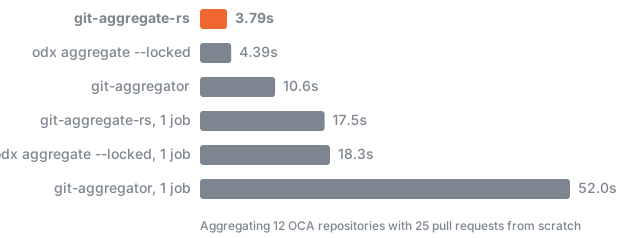
Tool |
cold |
warm |
no-op |
|---|---|---|---|
git-aggregate-rs 0.0.4 |
3.79 s |
1.11 s |
0.72 s |
git-aggregate-rs 0.0.4, 1 job |
17.5 s |
5.46 s |
2.32 s |
odx 0.0.4 |
4.39 s |
1.24 s |
0.18 s |
odx 0.0.4 |
18.3 s |
5.52 s |
0.17 s |
git-aggregator 4.1, |
10.6 s |
10.3 s |
0.80 s |
git-aggregator 4.1, 1 job (its default) |
52.0 s |
51.7 s |
2.74 s |
All tools aggregate the same repos.yaml
(tests/fixtures/benchmark/repos.yaml):
12 OCA repositories on 17.0, each at a pinned base commit, with 25 pull
requests that were merged upstream later, so the fixture never drifts. For odx it is the same project as
[tool.odx] (merge commits, as git-aggregator makes), locked once with
odx lock before the timings.
Times are the median of 5 runs after one warm-up run, on a 28-thread x86-64
Linux machine with git 2.55.
cold: no cache and no target directories.
warm: target directories removed, the git-aggregate-rs cache kept. For git-aggregator the target directories are its only cache, so warm is the same work as cold. This is the case of a second project, or a fresh checkout in CI with a persisted cache.
no-op: everything from the previous run still in place. git-aggregator and git-aggregate-rs fetch and merge again;
odx aggregate --lockedsees that every working tree already is the locked result and does nothing.
The repositories are served from local bare mirrors over file://, so the
numbers measure the tools rather than the network; over the internet the
cold and warm differences grow with the amount fetched. Every run’s result is
checked against the trees git-aggregator builds
(trees.json),
so a timing only counts when every tool did the same work.
To reproduce:
$ just bench --seed ~/git/OCA      # mirrors built from existing OCA clones
$ just bench --mode github         # fetch from github.com instead
The script (scripts/benchmark.py)
builds the mirrors under target/bench, installs git-aggregator 4.1 in a
virtual environment of its own with uv, prints the table and rewrites the
chart in docs/_static/.